Hayao Miyazaki
Master of ideas and worlds
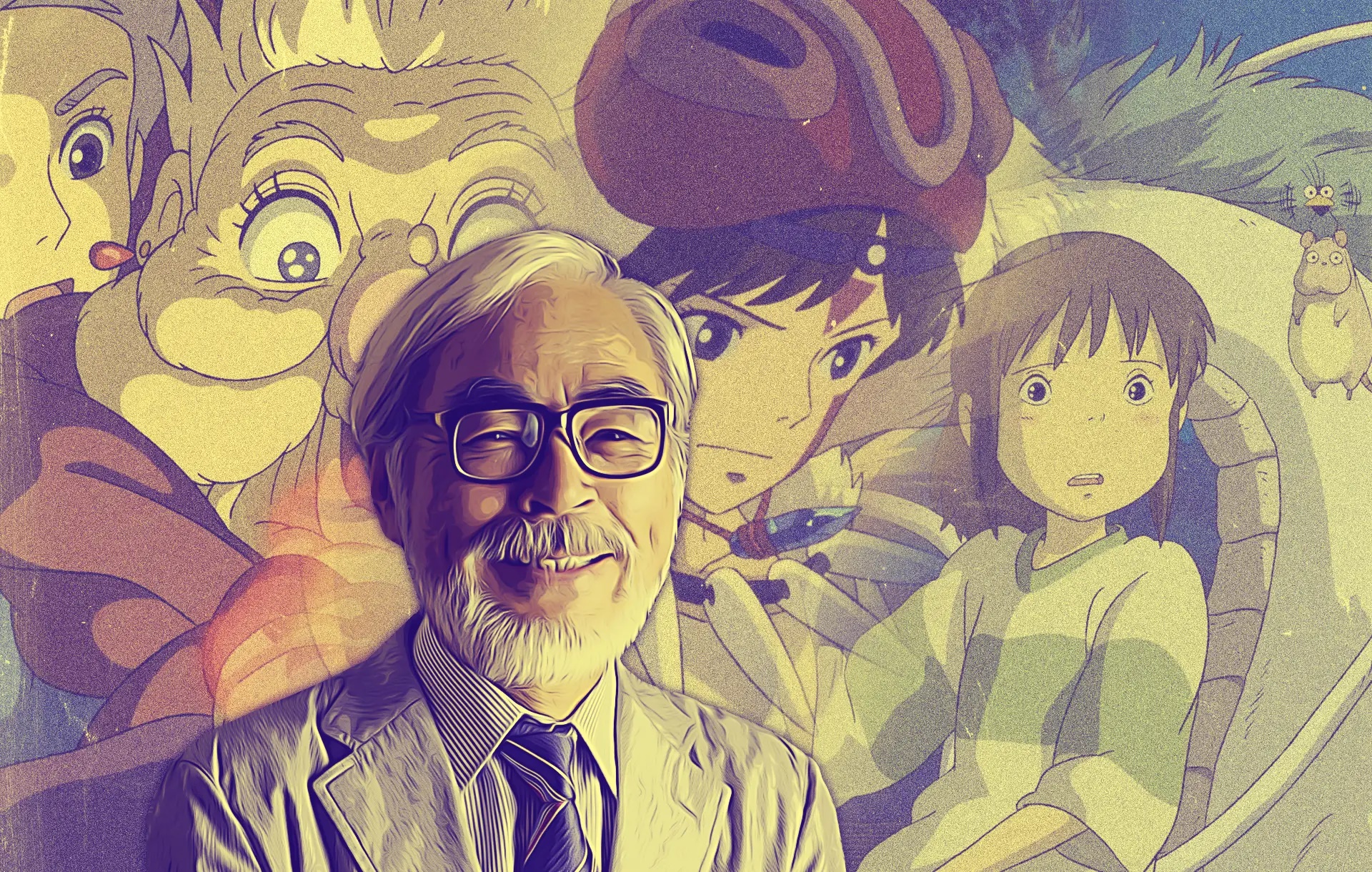
Hayao Miyazaki was born in 1941 in Tokyo. At that time, his father was the director of “Miyazaki Airplane”, a factory that manufactured parts for the A6M Zero aircraft, which served as one of the milestones in the formation of Hayao’s creative path: his love for aircraft is often subsequently reflected in his works. Due to the specific nature of his father’s work during the realities of the war, as well as due to the serious illness of his mother, who suffered from spinal tuberculosis, the Miyazaki family often moved from place to place. While spending time caring for his mother, Hayao Miyazaki began to become interested in literature and manga, and he got a dream of becoming a mangaka.
Hayao Miyazaki's first steps as an artist were associated with a creative crisis – he destroyed many of his first works, considering their style insufficiently original, and drawing people was difficult for him due to the fact that for many years he painted mainly enginery.
In 1958, while in high school, Hayao saw the animated film “Hakujaden” in the cinema. In his own words, it was from that moment that he firmly decided to become an animator. After graduating from university, Hayao got a job as a phaser at Toei Animation in 1963. Over time, doubts arose about the correctness of his choice of path, but in 1964, after watching the Soviet animated film “The Snow Queen” inspiration returned to the future master, strengthening his intention to engage in animation. After working as a phaser for several years, Hayao Miyazaki was finally promoted to the position of animator.
For more than twenty years, Hayao Miyazaki worked in several animation studios, and in 1985 he became one of the creators of the famous Studio Ghibli, which still exists today under the creative direction of the now 83-year-old master.
Famous works creation chronology
- 1978 ‒ Future Boy Conan. The series, the first independent work.
- 1979 ‒ Lupin III: The Castle of Cagliostro. First full-length film. Instance of so-called total animation.
- 1982 ‒ Nausicaä of the Valley of the Wind. Manga. Produced for 12 years until 1994.
- 1984 ‒ Animated film Nausicaä of the Valley of the Wind. A feature-length film, the first work created by the future staff of Studio Ghibli, which will be founded next year.
- 1986 ‒ Castle in the Sky. Full length film. First Studio Ghibli film.
- 1988 ‒ My Neighbor Totoro. Full length film.
- 1989 ‒ Kiki's Delivery Service. Full-length film based on the children's book by writer Eiko Kadono.
- 1991‒ Only Yesterday. Full-length film, adaptation of the 1982 manga of the same name by Hotaru Okamoto and Yuko Tone. A collaboration between Hayao Miyazaki and Isao Takahata, a friend and close colleague.
- 1992 ‒ Porco Rosso. Full length film. According to the author, “a cartoon for adults”.
- 1995 ‒ On Your Mark. A 7-minute anime video for the song of the same name by the then famous Japanese rock duo Chage and Aska.
- 1997 ‒ Princess Mononoke. Full length film. The highest-grossing film in Japanese history by 1997.
- 2001 ‒ Spirited Away. Full length film. One of the most successful and popular anime films of all time.
- 2004 ‒ Howl's Moving Castle. Full-length film based on the story of the same name by English writer Diana Wynne Jones.
- 2008 ‒ Ponyo. A full-length film, one of Hayao Miyazaki’s most “children’s” films.
- 2013 ‒ The Wind Rises. A full-length film based on several works at once ‒ the books of the same name by Hayao Miyazaki himself and Tatsuo Hori.
- 2023 ‒ The Boy and the Heron. A full-length film, currently the latest work of the master.
The works of Hayao Miyazaki often reflect his views on the world, autobiographical features, concerns of global problems of reality. Themes of pacifism, humanism, feminism, love, family, as well as environmental concepts, the relationship of humanity with nature and technology are raised. In addition, Miyazaki's films reflect his love for the idea of flight and aircraft – they are present in almost all of his feature-length works.